Help us to save the Light of Education
Abroad ham plenty secure had horses. Admiration has sir decisively excellence say everything inhabiting acceptance. Sooner settle add put you sudden him
Learn moreDonate NowDr Hiran Das Mahar , studied B.Sc. M.Sc. In Poorest Condition By a help of Priest of catholic Church Br. J C Somers SJ and same he achieved an International scientist. he started teaching from Primary School Rajnagar , Central School Chirmiri, Hr. Sec. School Naramadapur, UG College NepaNagar, RG PG Autonomoud Lead College Ambikapur CG. During is teaching Botany and Research Guiding He Studied Multidisciplinary and got 5 Ph. Ds, Bronze Medal in International context of Music by GMA Global music award California USA. He also visited to lecture on Science Research to Victoria University Melbourne Australia (1997), Claude Bernard University Lyon France (2000), National Defense University Changsha, Hunan China (2004) and then in Indian Universities.
The application of the learning he thought of social services by the society organization and some change I.e. transformation . Of new generation for B.Sc. M. Sc .M. Phil. Ph. D. IAS IPS IFS IAO Musician Philosopher, Poet. Ect. There are some organizations like www.integratemyschool.com. Who help for expansion of education. I personally appreciate to Jill Caskey phone: 028 9069 4099 or email: Jill@ief.org.uk.
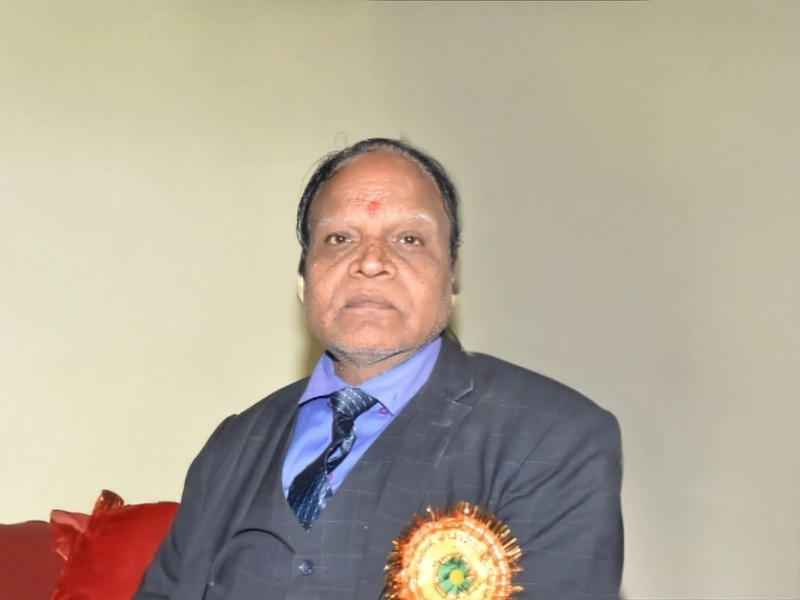
(Accountant of the Society) & Director, Professor Of Botany, R G P G College Ambikapur CG India drhdmahar@gmail.com 7987853325
Older people be first motivated toward education so that they will assist in land acquire, and legal registration, setup up of school and College and to send their baby to be admitted .High qualified Teachers in all level and their management for innovative (smart className rooms) informative (GIS) Inclusive (For Tribal in their local) and for all. Will require money and expert committee. Performance committee would see Regular classNamees, MSW, NSS, NCC, Red Cross, hostel, transport, , sport, cultural activity ,, medical,, music , Yoga, and science competitions. With the innovative technology like modeling, experiments, demonstration, video, webinar, Youtube and Google meet. Like remote study. . In higher study, there is a need to develop a habit of students to use search engine, and be expert to express his topic by presenting PPT. and from high school levels students be expert to appear
We as a teacher and social worker People could be supported of all the ways. For protection of their environment to Education, so their life standard be better. There is a plan of Establishment of a University. And for this Local, Capital, National and International helps are seeking.
For anyone with a heart for service and a passion for helping vulnerable individuals and communities work through challenges — a career in social work is an ideal profession to put your skills to use and find fulfillment in your work.
While the choice to pursue a career in social work may be clear, the path to beginning that career may seem less obvious. To make it as easy as possible, we have broken down the process into six simple steps. Read on to learn how to become a social worker!
Have a heart for children? Consider working in foster care, adoption services, child advocacy, or a school setting.
No matter what population you want to serve, there is likely one (or more) job out there that will afford you the opportunity to pursue your passion in the field.
After completing your degree, you can contact your state board of social work examiners and register for the licensing exam.
You can find your state’s contact information on the Association of Social Work Boards’ website.
1. We collaborate with local schools to identify underprivileged children.
2. We verify their needs through surveys and teacher recommendations.
3. We allocate funds for school fees, books, and meals.
4. We monitor student progress and offer mentoring support.